Unicorn Love Typeface Review: A Joyful Handwritten Font for Branding
I was staring at a blank brand board, trying to find the right personality for a small-batch skincare label. The concept was all about self-care, playfulness, and breaking away from sterile clinical aesthetics. I had already set up my sans serif headers and clean body text, but something felt missing. It needed warmth. It needed a human touch that didn’t feel forced or overly corporate. That’s when I pulled Unicorn Love into my design file.
As an experienced brand designer, I’ve tested hundreds of typefaces, often sifting through generic scripts that lack character or handwritten fonts that struggle with legibility. But placing Unicorn Love on the mockup immediately shifted the mood of the entire project. This isn’t just another decorative font; it is a cute and quirky handwritten font that brings an incredibly joyful touch to any design. In this review, I’ll walk you through how Unicorn Love performed across various branding assets, from logo drafts to packaging, and share practical insights on where it shines—and where it might need support.
The Personality of Unicorn Love
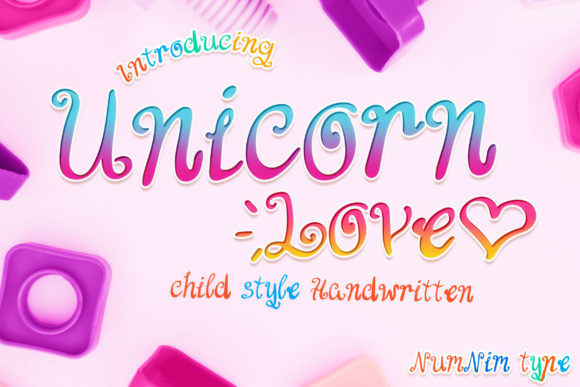
When you first look at Unicorn Love, the name tells you exactly what to expect: whimsy, charm, and a bit of magic. Visually, it mimics the natural flow of a marker or brush pen, complete with slight irregularities that make it feel authentic rather than digitally rigid. The strokes are rounded and friendly, avoiding the sharp edges that can sometimes make script fonts feel aggressive or dated.
In the context of modern typography, this font fits comfortably into the creative font category. It doesn’t try to be serious. Instead, it leans into emotion. When I used it for a boutique identity project, the immediate effect was one of approachability. It signals to the viewer that the brand is fun, accessible, and perhaps a little unconventional. This makes it particularly effective for businesses that want to stand out without shouting. It adds a beautiful font element to your creative ideas, making them stand out in a crowded market by injecting personality directly into the visual hierarchy.
Testing Unicorn Love in Real-World Branding Projects
To truly understand if a font works for commercial use, you have to test it under pressure. Here is how Unicorn Love performed across different design assets during my recent workflow testing.
Logo Design and Brand Identity
For logo design, simplicity is key. While Unicorn Love is expressive, it can work as a primary logotype for brands that embrace a playful aesthetic. I tested it on a bakery packaging mockup, where it served as the main wordmark. Because the letters connect naturally, it reads well as a single unit. However, because it is a display font, it loses its impact if scaled down too small. For a full brand identity, I recommend using Unicorn Love as the headline or logo accent, paired with a neutral sans serif font for secondary information like addresses or ingredients. This contrast ensures professional recognition while maintaining the fun vibe.
Packaging Design and Product Labels
Packaging is where handwriting fonts truly shine. On product labels, especially for handmade goods, candles, or artisanal foods, Unicorn Love adds a tactile quality. It looks like it was written by hand, which builds trust with consumers who value craftsmanship. I placed it on a shop sign mockup and a social media graphic for an online shop owner, and in both cases, it drew the eye immediately. The quirky nature of the letterforms creates visual interest that stops the scroll on Instagram posts or catches attention on a physical shelf.
Web Design and Social Media Graphics
In web design, headlines are prime real estate. Using Unicorn Love for a homepage hero section can instantly establish a brand’s tone. It pairs beautifully with ample white space, allowing the font to breathe. For social media graphics, it works exceptionally well for short phrases, quotes, or event announcements. Its readability holds up well at medium sizes, making it ideal for Instagram stories or Pinterest pins where you need to convey a message quickly.
Practical Applications and Pairing Advice
One of the biggest mistakes designers make is relying on a single typeface for everything. Unicorn Love is best used as an accent font or headline font. It is not designed for long body text. Trying to read paragraphs in a handwritten script fatigues the eyes and reduces comprehension. Therefore, strategic font pairing is essential.
For a balanced modern typography system, pair Unicorn Love with a clean geometric sans serif font. The structure of the sans serif provides a stable foundation, while Unicorn Love adds the emotional hook. Alternatively, if you are working on editorial design for a lifestyle blog or magazine, a classic serif font can provide a sophisticated counterpoint to the whimsy of the script. This combination elevates the design, preventing it from looking too childish or unprofessional.
Here are some specific use cases where Unicorn Love excels:
- Bakery Packaging: Evokes homemade, fresh, and inviting qualities.
- Creative Studio Identity: Signals innovation and artistic flair.
- Event Posters and Flyers: Adds excitement and urgency to announcements.
- Business Cards: Use it sparingly for names or titles to add a personal signature feel.
- Digital Products: Perfect for cover designs of planners, journals, or printable art.
Limitations and What to Avoid
No font is perfect, and understanding the limitations of Unicorn Love is crucial for maintaining professionalism. As a cute and quirky handwritten font, it has a distinct personality that may clash with formal industries. Avoid using it for law firms, financial institutions, or medical practices where trust and seriousness are paramount. The whimsical nature of the letters can undermine credibility in these contexts.
Additionally, be mindful of scale. At very small sizes, such as footnotes or fine print on clothing tags, the details of the handwriting can become muddy. Always test your designs at actual size before finalizing client work. If you need multilingual support, check the included styles carefully, as many script fonts do not include extended Latin characters or accented letters required for international brands.
Technical Details and Licensing
When downloading fonts from platforms like Script Amp or other Fonts repositories, always review the technical specifications. Look for included features such as alternates, ligatures, and swashes. These elements allow you to customize the font slightly, adding unique flourishes that make your design feel bespoke rather than templated. Check if webfont versions are available to ensure smooth rendering across different browsers for your digital projects.
Most importantly, pay close attention to commercial font licensing. Just because you downloaded the font does not mean you have the right to use it for every purpose. Some licenses restrict usage to personal projects only, while others allow commercial use in print, digital, and merchandise. Before using Unicorn Love in client work, brand identity systems, templates, merchandise, websites, digital products, or print-on-demand products, verify that your license covers the intended scope. This protects both you and your clients from legal issues down the line.
Final Verdict
Unicorn Love is a delightful addition to any designer’s toolkit. It succeeds in delivering on its promise of joy and quirkiness without sacrificing readability in short-form applications. Whether you are designing a logo for a local restaurant, creating social media graphics for a handmade seller, or refreshing a brand identity for a creative studio, this font offers a reliable way to inject personality. By testing it realistically, pairing it wisely, and respecting its limitations, you can leverage Unicorn Love to create designs that resonate emotionally with your audience. It is more than just a typeface; it is a mood enhancer for your creative ideas.